
Hidden water leaks are frustrating because they often start quietly. A pipe can seep behind a cupboard, under paving, inside a wall, or near an outside line for days before anyone sees obvious water. In Garden Route homes and businesses, where coastal moisture, older pipework, sloped properties and holiday homes can all complicate plumbing issues, spotting the early signs matters.
A hidden leak is not only about wasted water. It can lead to damp smells, swollen skirtings, damaged cupboards, mould growth, higher municipal bills and unnecessary repairs if it is left too long. H2O Plumbers helps property owners across George, Mossel Bay, Knysna, Oudtshoorn and the wider Garden Route investigate leaks with practical checks and leak detection equipment before walls or floors are opened unnecessarily.
Why hidden water leaks are easy to miss
Not every leak creates a puddle. Some leaks run into wall cavities, soak into sandy ground, drain beneath paving or appear only when a certain tap, toilet, geyser line or irrigation connection is used. On business properties, the first clue may be a staff member noticing a damp smell in a bathroom or a water meter that keeps moving after closing time.
Garden Route properties can also have mixed plumbing histories. A home may have newer renovations connected to older pipe runs, outside taps added over time, or bathroom alterations where pipe routes are not obvious. That is why a careful inspection is better than guessing.
Common signs of a hidden leak
The clearest warning sign is a water bill that rises without a clear change in use. If the household or business routine has stayed the same, but usage has climbed, check the meter and start looking for other clues.
Watch for damp patches on walls, bubbling paint, soft or swollen skirting boards, musty smells, loose tiles, mould in corners, unexplained wet paving, greener patches of lawn, or low water pressure that comes and goes. A toilet that quietly refills or a geyser overflow that runs often can also waste a lot of water while feeling like a small issue.
A simple meter test you can do first
Before calling a plumber, turn off all taps, appliances, irrigation and water-using fixtures. Make sure nobody uses water for a few minutes. Then check the water meter. If the meter keeps moving while everything is off, there may be a leak somewhere on the property.
This test does not tell you exactly where the leak is, but it helps separate a plumbing concern from normal use. If the meter moves slowly, take a photo, wait fifteen to thirty minutes, and compare. For commercial properties, do this after hours when water use is easier to control.
Where leaks often hide
Bathrooms and kitchens are common starting points because there are many connections close together. Look around basin traps, toilet supply lines, shower mixers, bath panels, sink cupboards and washing machine points. Outside, check garden taps, exposed pipework, paving edges, retaining walls and any area where water appears after dry weather.
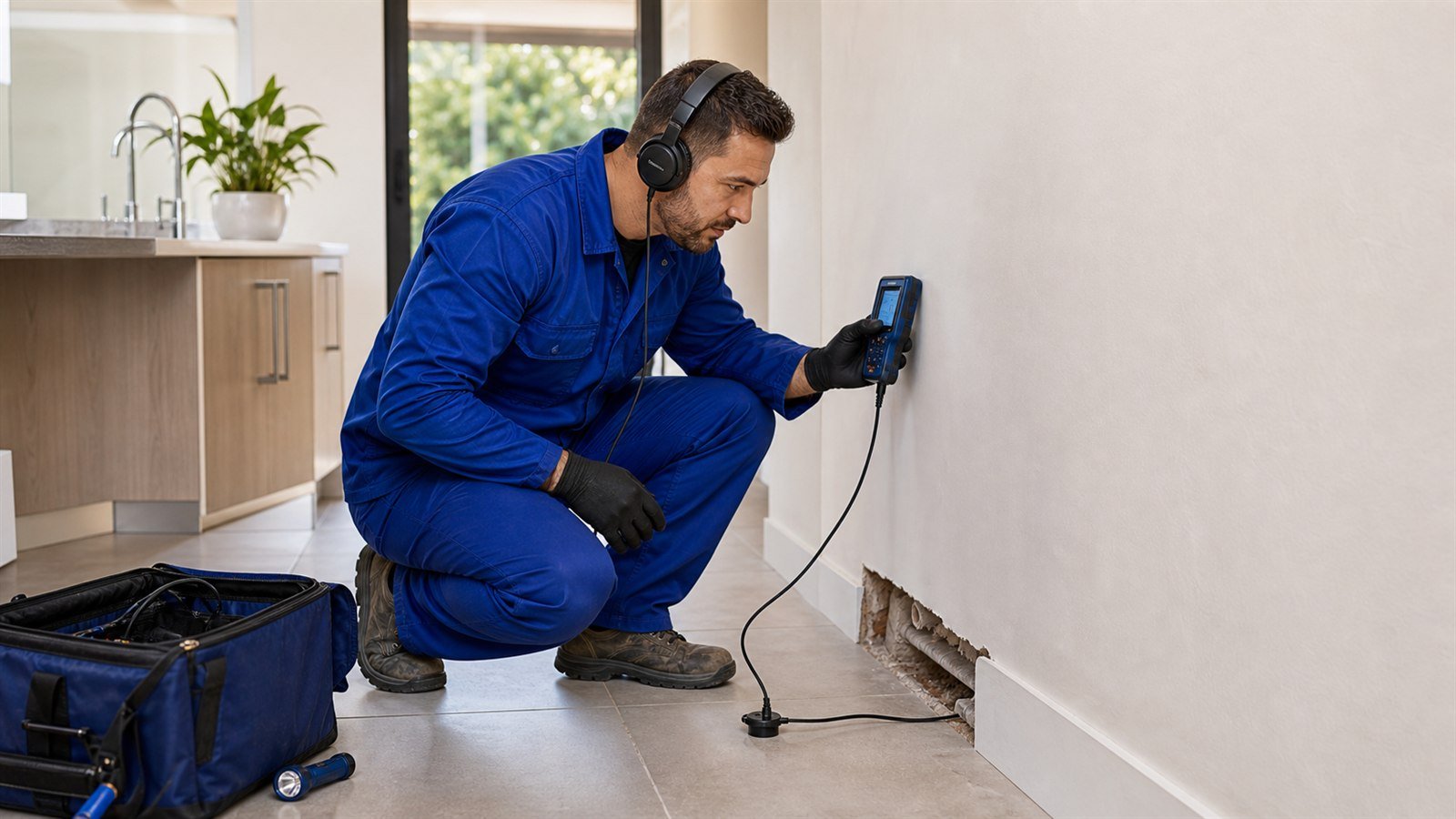
Underground leaks need more care. Digging randomly can create extra damage and still miss the problem. Leak detection equipment, pressure testing and a step-by-step inspection can narrow the search and help decide the cleanest repair route.
When to call H2O Plumbers
Call for help when the meter keeps moving, damp marks spread, water pressure changes suddenly, or a leak returns after a quick repair. It is also worth calling if you are buying, renovating or managing a property and want a clearer view before more work begins.
H2O Plumbers assists homes and businesses across the Garden Route with leak detection, general plumbing repairs and practical advice. The aim is to find the problem, explain the next step clearly, and repair the leak with as little disruption as possible.
